
Introduction
The mining industry is a cornerstone of the global economy, responsible for providing the raw materials that power countless sectors, from construction to technology. Yet, mining is a challenging and resource-intensive process, requiring the deployment of robust and efficient machinery to extract and handle materials. Among the vast array of tools used in mining operations, cranes play a critical role in ensuring smooth and safe workflows.
Cranes are indispensable in the mining sector due to their ability to lift, transport, and position heavy loads with precision. These versatile machines are integral to everything from assembling large mining equipment to managing logistics for raw materials. Without cranes, the industry would struggle to meet the growing demands for productivity, safety, and efficiency.
This blog post explores the multifaceted role of cranes in the mining industry, delving into the types of cranes used, their operational applications, innovations, safety considerations, and the future of crane technology. By the end, readers will gain a comprehensive understanding of how cranes have transformed mining operations and will continue to shape the sector’s future.
Section 1: Types of Cranes Used in Mining
The mining industry relies on various types of cranes, each suited to specific tasks and environments. From large-scale open-pit mining to underground operations, the diversity of crane designs ensures that every need is met efficiently.
1.1 Overhead Cranes
Overhead cranes are a staple in mining operations, particularly in processing plants and maintenance facilities. These cranes consist of a horizontal beam supported by tracks, allowing them to move heavy loads across a fixed area. Key benefits include:
• High lifting capacity: Capable of handling extremely heavy loads, overhead cranes are ideal for transporting bulk materials like ores and metals.
• Precision handling: These cranes are often equipped with advanced controls for accurate placement.
• Durability: Designed to operate in harsh environments, they can withstand dust, moisture, and extreme temperatures.
1.2 Mobile Cranes
Mobile cranes are versatile, wheel-mounted units that provide flexibility in mining environments. Their ability to move between sites makes them indispensable for:
• Quick assembly and disassembly of mining equipment.
• Loading and unloading trucks.
• Handling tasks in areas with limited infrastructure.
1.3 Tower Cranes
Tower cranes are prominent in large-scale mining operations, particularly in infrastructure projects like mine construction. These cranes are characterized by:
• Vertical reach: Ideal for lifting heavy materials to significant heights.
• High stability: Designed to remain secure under extreme loads and challenging weather conditions.
• Long-term deployment: Frequently used for ongoing construction or expansion projects.
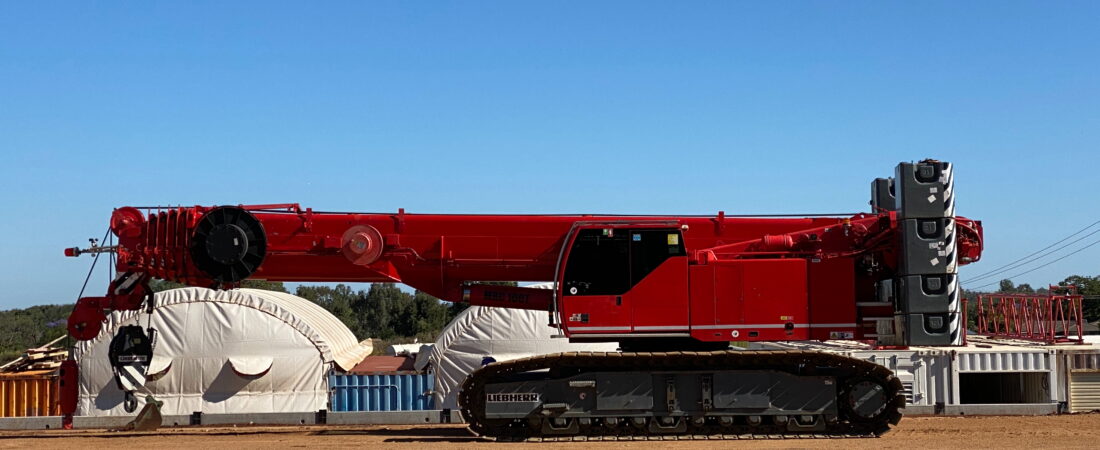
1.4 Crawler Cranes
Equipped with tracks instead of wheels, crawler cranes are designed for mobility on uneven terrain, a common feature of mining sites. Their advantages include:
• Stability on rough surfaces: Tracks distribute weight evenly, reducing the risk of tipping.
• Heavy lifting capabilities: Crawler cranes can handle some of the heaviest loads in mining operations.
• Flexibility: Useful for both construction and operational tasks.
1.5 Gantry Cranes
Gantry cranes operate similarly to overhead cranes but are mounted on a pair of legs rather than a fixed structure. These cranes are particularly useful for:
• Outdoor applications: Often used in open-pit mines or loading docks.
• Portability: The ability to move along tracks allows for flexibility in material handling.
• Customizability: Can be designed to handle specific mining materials or equipment.
1.6 Specialized Mining Cranes
In addition to these common types, specialized cranes are designed to meet the unique demands of the mining industry. Examples include:
• Drill rig cranes: Used to position and maintain drilling equipment.
• Explosion-proof cranes: Built for underground mines where flammable gases are a concern.
• Cable-handling cranes: Designed to manage the extensive cabling used in mining operations.
Section 2: Role of Cranes in Mining Operations
Cranes are central to the efficiency and functionality of mining operations. Their ability to lift, transport, and position heavy loads plays a vital role in ensuring productivity and safety across various tasks. Below, we explore the primary roles cranes play in the mining industry.
2.1 Loading and Unloading Heavy Materials
Mining involves the constant movement of large quantities of raw materials such as ore, coal, and aggregates. Cranes facilitate this by:
• Efficient loading: Transporting raw materials onto conveyors, trucks, or railcars.
• Streamlined unloading: Unloading mined materials at processing plants or storage facilities.
• Precision placement: Ensuring materials are positioned for seamless processing.
For example, gantry cranes often operate at open-pit mines to handle oversized loads, while mobile cranes quickly relocate materials between different points of operation.
2.2 Transporting Equipment and Raw Materials
Cranes are indispensable for moving massive mining equipment and materials across sites, especially in challenging terrains. This includes:
• Moving drilling rigs: Positioning and relocating heavy drilling equipment.
• Handling modular equipment: Transporting prefabricated mining components for on-site assembly.
• Supporting conveyor systems: Placing conveyor belts and related infrastructure for material transport.
Crawler cranes excel in such applications due to their ability to traverse uneven and rocky terrains.
2.3 Assisting in Assembly and Maintenance of Mining Machines
Mining equipment such as excavators, haul trucks, and processing units require regular assembly, disassembly, and maintenance. Cranes play a key role by:
• Lifting heavy machinery components: Positioning parts during assembly or repairs.
• Supporting maintenance crews: Providing access to difficult-to-reach areas of large machines.
• Reducing downtime: Allowing quick and efficient equipment servicing to minimize interruptions.
Overhead cranes are frequently deployed in workshops for these purposes, while mobile cranes are used for field operations.
2.4 Demolition and Decommissioning
When mining sites are retired or machinery becomes obsolete, cranes are vital for safe and efficient decommissioning. They assist by:
• Dismantling structures: Removing old infrastructure, such as conveyor belts, storage tanks, and processing plants.
• Handling waste materials: Transporting scrap metal or other debris for recycling or disposal.
• Preparing for rehabilitation: Clearing equipment and materials to make way for environmental restoration efforts.
Crawler and mobile cranes are often preferred for demolition work due to their versatility and strength.
2.5 Handling and Placement of Mined Products
Once extracted, mined products such as ore or minerals must be prepared for processing or shipping. Cranes contribute by:
• Positioning materials for crushing or screening: Ensuring smooth transitions in the production line.
• Loading ships and trains: Facilitating bulk material exports to global markets.
• Organizing storage yards: Placing and retrieving products in stockpiles or silos.
In coastal mining operations, port cranes are essential for loading materials onto cargo ships efficiently.
2.6 Enhancing Overall Efficiency
Beyond specific tasks, cranes contribute to overall operational efficiency by:
• Minimizing manual labor: Reducing the need for physically demanding and potentially dangerous tasks.
• Improving precision: Allowing materials and equipment to be placed exactly where they are needed.
• Accelerating workflows: Speeding up processes to keep up with production demands.
Cranes are integral to nearly every aspect of mining operations, offering a combination of power, precision, and reliability. Next, we’ll explore the technological innovations that are shaping crane design and performance in the mining industry.
Section 3: Engineering and Design Innovations
Cranes in the mining industry have undergone significant advancements in engineering and design to meet the sector’s increasing demands for efficiency, safety, and sustainability. In this section, we’ll explore how technology has revolutionized crane performance and the features that make modern cranes indispensable to mining operations.
3.1 Heavy-Duty Lifting Capacities
Mining requires cranes capable of handling exceptionally heavy loads, from large pieces of equipment to tons of raw materials. Recent innovations in engineering have enabled:
• Enhanced load capacities: Advances in metallurgy and structural design allow cranes to lift weights previously thought impossible, with some cranes capable of handling over 1,000 tons.
• Optimized counterweight systems: Improved counterbalance mechanisms increase stability and enable safer heavy lifting.
• Custom-built cranes: Manufacturers now design cranes specifically for mining applications, ensuring they meet the unique challenges of this industry.
For example, crawler cranes with reinforced booms are frequently used for hoisting massive drill components or excavator parts.
3.2 Durability for Harsh Conditions
Mining environments are notoriously harsh, with exposure to extreme temperatures, abrasive materials, and corrosive chemicals. Innovations in crane materials and construction ensure their reliability in such conditions:
• Corrosion-resistant coatings: Protective layers prevent damage from moisture, chemicals, and salt, particularly in coastal or underground mines.
• Wear-resistant components: High-stress areas of cranes, such as gears and cables, are made from ultra-durable materials like tungsten alloys or carbon composites.
• Sealed electronics: Advanced sealing technologies protect sensitive electronic systems from dust and water infiltration.
These features are especially crucial for overhead and gantry cranes used in processing plants.
3.3 Smart Crane Systems
The integration of automation and smart technologies has transformed cranes into more than just lifting machines. They are now intelligent systems equipped with features that enhance efficiency and safety:
• Automated controls: Systems like load-sensing and automated pathfinding reduce human error and optimize operations.
• IoT connectivity: Internet of Things (IoT) technology enables real-time monitoring of crane performance, ensuring early detection of issues such as wear and tear.
• Predictive maintenance: AI-driven diagnostics predict when components will fail, reducing downtime and repair costs.
• Remote operation: Operators can control cranes from a distance, increasing safety in hazardous environments like underground mines.
For example, autonomous cranes are being deployed in highly automated mining operations, allowing for 24/7 material handling without direct human intervention.
3.4 Advanced Safety Features
Safety remains a top priority in mining, and modern crane designs incorporate numerous innovations to protect workers and equipment:
• Anti-sway technology: Prevents loads from swinging during movement, reducing the risk of accidents.
• Overload protection systems: Sensors monitor load weight and prevent operations if limits are exceeded.
• Collision detection: Cameras, LiDAR, and other sensors alert operators to obstacles in the crane’s path.
• Emergency shutdown mechanisms: Automated systems stop operations immediately in case of a malfunction.
These features are particularly valuable in underground mining, where confined spaces and limited visibility increase the risk of accidents.
3.5 Materials and Construction Innovations
Advancements in material science have led to lighter, stronger, and more energy-efficient cranes:
• High-strength steel: Modern alloys allow cranes to bear heavier loads while maintaining a lightweight design.
• Carbon fiber components: Used in booms and jibs to reduce weight and improve fuel efficiency.
• Modular construction: Enables cranes to be assembled and disassembled quickly, making them more adaptable to changing mining needs.
3.6 Case Studies of Innovative Crane Models
Several manufacturers have introduced cutting-edge cranes tailored for mining:
• Liebherr Mining Cranes: Renowned for their durability and advanced safety features, these cranes are used in both open-pit and underground operations.
• Terex Demag CC 8800-1 TWIN: A powerful crawler crane with a lifting capacity of 3,200 tons, ideal for assembling massive mining equipment.
• Konecranes Smart Cranes: Equipped with IoT connectivity and automated controls, these cranes are setting new standards for efficiency in mining logistics.
3.7 Future Innovations in Crane Design
The future of crane technology in mining will likely include:
• Fully autonomous systems: Advanced AI and robotics will enable cranes to perform complex tasks without human intervention.
• Eco-friendly designs: Electric and hybrid cranes will replace diesel-powered models to reduce carbon emissions.
• Adaptable modular systems: Cranes will become more versatile, capable of transforming for different tasks.
• Augmented reality (AR) interfaces: AR-enabled controls will enhance operator precision and situational awareness.
The engineering and design innovations discussed here are driving the mining industry toward greater productivity and safety while reducing environmental impact. In the next section, we’ll delve into how safety considerations and technology work together to mitigate risks in mining crane operations.
Section 4: Safety Considerations in Mining Cranes
Safety is a critical aspect of any mining operation, and cranes, given their role in handling heavy loads and complex operations, pose unique risks. Proper safety measures, training, and technological advancements are essential to minimize hazards and ensure smooth operations.
4.1 Common Hazards in Mining Crane Operations
Mining environments present several safety challenges when operating cranes, including:
• Overloading: Exceeding a crane’s lifting capacity can lead to equipment failure or tipping, endangering workers and infrastructure.
• Falling loads: Improper securing of materials or mechanical failure can cause heavy loads to fall, with catastrophic consequences.
• Swing hazards: The swinging of suspended loads can strike personnel or structures.
• Unstable terrain: Cranes operating on uneven or loose ground are at risk of tipping, particularly mobile and crawler cranes.
• Environmental conditions: Dust, moisture, and extreme temperatures can compromise equipment functionality and operator visibility.
Recognizing these hazards is the first step toward mitigating risks.
4.2 Best Practices for Crane Safety in Mining
To ensure safe crane operations, the following best practices should be observed:
• Regular inspections: Conduct routine checks to identify wear and tear on cables, hooks, and structural components.
• Pre-operation assessments: Evaluate site conditions, including terrain stability and environmental factors, before deploying cranes.
• Load monitoring: Use load sensors to ensure cranes are operating within their capacity.
• Proper rigging: Train operators and workers in securing loads correctly to prevent slippage or imbalance.
• Clear communication: Establish communication protocols between crane operators and ground crews to coordinate movements effectively.
These practices not only protect workers but also extend the lifespan of equipment.
4.3 Operator Training and Certification
Well-trained operators are vital for safe crane operations. Training programs should cover:
• Equipment knowledge: Familiarity with crane controls, specifications, and limitations.
• Hazard identification: Recognizing potential risks in mining environments.
• Rigging techniques: Understanding how to secure loads properly.
• Emergency procedures: Knowing how to respond to equipment malfunctions or accidents.
Certifications from recognized organizations, such as the National Commission for the Certification of Crane Operators (NCCCO), ensure operators meet industry standards.
4.4 Technological Safety Innovations
Modern cranes are equipped with advanced safety features to prevent accidents and protect workers:
• Anti-sway systems: Reduce load oscillation during lifting and transportation.
• Dynamic stability control: Adjusts the crane’s balance in real-time to prevent tipping.
• Proximity sensors: Detect obstacles in the crane’s path and alert operators to avoid collisions.
• Load moment indicators (LMIs): Monitor and display lifting parameters, such as load weight and boom angle, to prevent overloading.
• Emergency stop functions: Allow operators to halt operations instantly in case of an emergency.
These technologies, combined with operator vigilance, create a safer working environment.
4.5 Maintenance and Inspections
Regular maintenance is essential to prevent accidents caused by equipment failure. Key steps include:
• Daily checks: Inspect hooks, wires, and controls before each operation.
• Scheduled servicing: Follow manufacturer-recommended maintenance schedules for lubrication, part replacement, and system calibration.
• Structural assessments: Check for cracks, corrosion, or other damage to the crane’s frame and boom.
• Testing safety systems: Ensure that alarms, sensors, and emergency shutoffs are functioning correctly.
Digital maintenance logs, enabled by IoT systems, can simplify record-keeping and provide alerts when inspections are due.
4.6 Case Studies: Safety in Action
Real-world examples highlight the importance of safety measures:
• Overload prevention in South African mines: A gantry crane equipped with an advanced load-monitoring system prevented a potentially catastrophic overload situation by automatically halting the operation.
• Collision avoidance in Australian coal mines: Mobile cranes outfitted with proximity sensors reduced accidents involving workers and nearby vehicles.
• Remote operation in underground mines: Remote-controlled overhead cranes in a Canadian mine enhanced safety by eliminating the need for operators to work in high-risk areas.
These cases illustrate how safety innovations save lives and reduce downtime.
4.7 The Role of Regulatory Compliance
Compliance with safety regulations is mandatory to protect workers and minimize liability. Key regulations include:
• OSHA Standards (USA): Specify requirements for crane operation, maintenance, and training.
• ISO Standards (Global): Cover safety protocols for lifting equipment in industrial settings.
• Local mining laws: Each country’s mining authority often has additional rules for crane operations in the sector.
Staying compliant ensures legal adherence and fosters a culture of safety.
4.8 Future Directions in Crane Safety
The future of crane safety in mining will likely include:
• AI-powered monitoring: Advanced AI systems that predict risks based on real-time data.
• AR-enhanced training: Using augmented reality for realistic operator training simulations.
• Wearable tech integration: Smart helmets and vests for workers that communicate with crane systems to prevent collisions.
• Autonomous safety systems: Fully automated cranes that eliminate human error from the equation.
Safety considerations in mining crane operations are not optional; they are a necessity to protect lives, equipment, and productivity. By combining best practices, proper training, and advanced technology, the industry can continue to reduce risks and improve operational safety.
Section 5: Environmental Impact and Sustainability
The mining industry faces increasing scrutiny over its environmental footprint, and cranes play a critical role in this dialogue. From energy consumption to emissions, cranes influence the sustainability of mining operations. This section explores the environmental challenges and the innovative solutions transforming cranes into more sustainable tools.
5.1 Environmental Challenges of Cranes in Mining
Cranes, like many heavy-duty machines, can negatively impact the environment if not properly managed. Key challenges include:
• Energy consumption: Traditional diesel-powered cranes are fuel-intensive, contributing to greenhouse gas emissions.
• Noise pollution: The noise generated by cranes can disrupt ecosystems, particularly in remote or ecologically sensitive mining areas.
• Wear and tear: The degradation of parts such as cables and hydraulic fluids can lead to waste and pollution.
• Habitat disruption: Large cranes used in open-pit mining can disturb local wildlife and vegetation.
Addressing these challenges is critical for creating environmentally responsible mining operations.
5.2 Sustainable Practices in Crane Operations
Several measures can minimize the environmental impact of cranes in mining:
• Regular maintenance: Well-maintained cranes operate more efficiently, reducing fuel consumption and emissions.
• Optimized workflows: Planning crane operations to minimize unnecessary movements or idle time reduces energy use.
• Material recycling: Proper disposal and recycling of worn parts, such as steel cables, prevent environmental contamination.
Sustainable operational practices not only benefit the environment but also reduce costs for mining companies.
5.3 Adoption of Electric and Hybrid Cranes
The introduction of electric and hybrid cranes is revolutionizing sustainability in mining. These cranes offer:
• Reduced emissions: Electric cranes eliminate exhaust emissions, while hybrid models significantly lower fuel consumption.
• Lower noise levels: Electric motors operate more quietly than diesel engines, reducing noise pollution.
• Improved efficiency: Hybrid systems use regenerative braking to capture and reuse energy, enhancing overall performance.
For example, Liebherr’s line of hybrid crawler cranes demonstrates how manufacturers are prioritizing eco-friendly designs without compromising power.
5.4 Energy-Efficient Innovations
Manufacturers are developing technologies to make cranes more energy-efficient:
• Variable frequency drives (VFDs): Optimize energy usage by adjusting motor speed based on load requirements.
• Smart grid integration: Electric cranes can connect to renewable energy grids, reducing reliance on fossil fuels.
• Hydraulic energy recovery systems: Capture excess hydraulic energy during operations and store it for future use.
These innovations align with global sustainability goals, making cranes a more environmentally conscious choice for mining.
5.5 Eco-Friendly Design Materials
Sustainability begins with the materials used in crane construction. Modern cranes feature:
• Recyclable steel: Many manufacturers now use high-strength, recyclable steel in crane construction.
• Lightweight composites: Materials like carbon fiber reduce the overall weight of cranes, improving fuel efficiency.
• Non-toxic coatings: Paints and coatings are now designed to be free of harmful chemicals, reducing environmental harm during manufacturing and use.
These material choices not only lower the environmental impact but also improve crane performance and durability.
5.6 Recycling and Repurposing in Mining Cranes
The mining industry is increasingly embracing a circular economy model by:
• Repurposing cranes: Retired cranes are often refurbished and redeployed for other applications, extending their lifecycle.
• Recycling components: Metal parts, motors, and hydraulic systems are recycled or reconditioned for use in new equipment.
• Waste reduction programs: Encouraging proper disposal of crane components minimizes environmental harm.
These efforts significantly reduce the amount of waste generated by crane operations.
5.7 Companies Leading the Way in Sustainability
Several manufacturers and mining companies are setting new standards for sustainability:
• Konecranes: Known for its energy-efficient electric cranes, which incorporate smart technology to optimize operations.
• Caterpillar: Focused on hybrid crane models and the development of sustainable mining equipment.
• Rio Tinto: Implementing electric crane systems as part of its broader commitment to reducing carbon emissions.
These organizations demonstrate how sustainability can be integrated into crane design and mining operations.
5.8 Future Directions for Sustainable Cranes
The future of cranes in mining will likely see continued innovation in sustainability, including:
• Full electrification: Transitioning entirely to battery-powered cranes that rely on renewable energy sources.
• Solar-powered cranes: Incorporating solar panels to generate energy for operations, particularly in remote locations.
• AI-driven efficiency: Using artificial intelligence to optimize energy consumption and reduce waste.
• Carbon-neutral manufacturing: Manufacturers adopting sustainable production processes to lower the carbon footprint of new cranes.
These developments will help the mining industry align with global environmental goals while maintaining operational efficiency.
Cranes are essential to the mining industry, but their environmental impact cannot be ignored. By embracing sustainable practices, adopting innovative technologies, and investing in eco-friendly designs, the industry can reduce its footprint while maintaining productivity.
Section 6: Economic Impact and Industry Trends
Cranes are not only vital tools for operational efficiency in mining but also significant contributors to the economic dynamics of the industry. This section examines the economic benefits of cranes, their cost-efficiency, and the evolving trends shaping their use in mining operations.
6.1 Economic Benefits of Cranes in Mining
Cranes provide substantial economic advantages, making them indispensable for mining companies aiming to optimize profitability:
• Increased productivity: Cranes enable faster and more efficient movement of materials and equipment, minimizing downtime.
• Cost savings: By reducing the need for manual labor and expediting tasks, cranes lower operational costs over time.
• Versatility: The ability to use a single crane for multiple tasks (e.g., assembly, material handling, and maintenance) reduces the need for additional equipment.
• Longevity of equipment: Proper crane operations, aided by technological advancements, ensure machinery longevity, decreasing the frequency of expensive replacements.
These benefits translate into higher profit margins and improved resource allocation.
6.2 Cost Efficiency of Crane Technology
Investing in high-quality cranes offers long-term financial savings for mining companies:
• Fuel efficiency: Hybrid and electric cranes consume less fuel, reducing operational expenses and dependency on fossil fuels.
• Maintenance savings: IoT-enabled systems predict maintenance needs, preventing costly breakdowns and extending equipment lifespans.
• Improved workforce efficiency: With automated cranes, fewer workers are required to perform complex tasks, resulting in reduced labor costs.
Although advanced crane technologies may require higher upfront investment, their efficiency and durability make them cost-effective in the long run.
6.3 Market Trends for Cranes in the Mining Sector
The global demand for cranes in the mining industry continues to grow, driven by several key trends:
• Increased automation: The push toward automated mining operations is fueling demand for smart cranes that integrate seamlessly into automated workflows.
• Expansion of hybrid and electric models: Rising energy costs and stricter environmental regulations are driving the shift from diesel-powered cranes to greener alternatives.
• Growth in emerging markets: Rapid industrialization in countries such as India, Brazil, and South Africa is increasing demand for mining cranes.
• Technological advancements: Innovations in artificial intelligence, IoT, and materials science are expanding the capabilities of cranes, attracting investments.
The global crane market in mining is projected to grow steadily, with hybrid and electric cranes expected to dominate future sales.
6.4 Automation and Robotics in Crane Operations
Automation is reshaping how cranes are used in mining:
• Autonomous operations: Cranes equipped with AI and machine learning algorithms can perform tasks with minimal human intervention, improving efficiency and safety.
• Remote-controlled cranes: Operators can control cranes from safe locations, reducing the risk of accidents in hazardous areas.
• Integrated systems: Smart cranes are designed to communicate with other mining equipment, optimizing workflows and reducing bottlenecks.
For example, autonomous gantry cranes are increasingly used in underground mines to manage material transport in confined spaces.
6.5 Sustainability Trends and Green Technology
Sustainability is a major driver of innovation in crane technology:
• Adoption of renewable energy: Solar-powered cranes and electric models are gaining traction in regions with access to renewable energy sources.
• Carbon-neutral operations: Many manufacturers are working to reduce emissions from crane production and operation, aligning with global sustainability goals.
• Circular economy principles: Refurbishing and recycling cranes are becoming standard practices, reducing waste and resource consumption.
These trends not only benefit the environment but also appeal to investors and stakeholders prioritizing sustainability.
6.6 Challenges and Opportunities in the Global Crane Market
Despite the positive outlook, the crane market faces challenges:
• Supply chain disruptions: The COVID-19 pandemic highlighted vulnerabilities in the global supply chain for crane components.
• Regulatory hurdles: Strict environmental and safety regulations can increase production costs for manufacturers.
• Skilled labor shortage: A lack of trained crane operators and technicians may hinder adoption in some regions.
However, these challenges present opportunities for innovation, such as:
• Modular cranes: Easy-to-assemble models that reduce dependence on complex supply chains.
• Training programs: Partnerships between manufacturers and mining companies to develop skilled operators.
• Regional manufacturing hubs: Establishing local production facilities to reduce logistics costs and delays.
6.7 Predictions for the Future of Cranes in Mining
The future of cranes in the mining industry looks promising, with several emerging trends expected to shape the market:
• Smart mining ecosystems: Fully automated mines where cranes are integrated with other equipment for seamless operation.
• 3D-printed crane components: On-site manufacturing of parts to reduce downtime and supply chain dependence.
• Eco-friendly materials: Increased use of sustainable and recyclable materials in crane construction.
• Global market growth: Expanding mining activities in Africa, Asia, and South America will continue to drive demand for advanced crane technologies.
These trends underscore the vital role cranes will play in the future of mining.
6.8 Realizing Economic Potential Through Innovation
By embracing innovation and sustainability, the mining industry can maximize the economic potential of crane operations. Key strategies include:
• Investing in technology: Mining companies that prioritize advanced cranes will benefit from improved efficiency and reduced costs.
• Collaboration with manufacturers: Close partnerships can lead to customized solutions tailored to specific mining needs.
• Diversifying crane applications: Exploring new uses for cranes, such as renewable energy projects within mining operations, can open additional revenue streams.
The economic impact of cranes in the mining industry is undeniable. With advancements in technology and growing trends toward sustainability, cranes will continue to enhance productivity and profitability while meeting environmental and social responsibilities.
Section 7: Real-World Applications and Case Studies
The use of cranes in mining operations has led to transformative results in productivity, safety, and efficiency. Real-world examples demonstrate how these machines are utilized to solve complex challenges, meet project demands, and contribute to the overall success of mining operations. Below, we explore several notable applications and case studies.
7.1 Cranes in Open-Pit Mining
Open-pit mines are massive operations requiring heavy-duty cranes to manage equipment, materials, and infrastructure.
• Case Study: Copper Mine in Chile
A copper mine in Chile faced logistical challenges in assembling and maintaining large excavators and haul trucks. The solution involved deploying several crawler cranes with lifting capacities exceeding 500 tons.
• Outcome: The cranes expedited the assembly of equipment, reducing downtime and increasing productivity. Their mobility allowed seamless transitions between different sections of the mine.
• Environmental impact: By using hybrid cranes, the mine reduced fuel consumption by 30%, contributing to its sustainability goals.
7.2 Underground Mining Applications
Underground mining presents unique challenges, such as confined spaces, low visibility, and difficult terrain. Specialized cranes are designed to operate in these conditions.
• Case Study: Canadian Gold Mine
An underground gold mine in Canada implemented overhead cranes to transport heavy ore bins and maintain conveyor systems. Remote-controlled cranes were also used to minimize risks to workers in hazardous areas.
• Outcome: The remote-controlled cranes increased safety by keeping operators out of danger zones. The overhead cranes streamlined material transport, improving overall efficiency by 25%.
• Technological impact: The use of IoT-enabled cranes allowed for real-time monitoring, which helped optimize maintenance schedules and prevent breakdowns.
7.3 Cranes in Mining Equipment Maintenance
Large mining equipment requires regular maintenance, and cranes play a critical role in disassembling and reassembling machinery.
• Case Study: Iron Ore Mine in Australia
In an Australian iron ore mine, a gantry crane was installed to service massive dump trucks and excavators. The crane had a lifting capacity of 1,000 tons, allowing it to handle the largest components with ease.
• Outcome: The gantry crane reduced maintenance times by 40%, enabling equipment to return to operation more quickly.
• Economic benefit: The improved maintenance process resulted in cost savings of millions of dollars annually by minimizing equipment downtime.
7.4 Material Handling and Logistics
Efficient material handling is essential in mining operations, and cranes are often used for loading, unloading, and transporting raw materials.
• Case Study: Coal Mine in South Africa
A coal mine in South Africa relied on gantry cranes to load coal onto railcars for transport to nearby processing facilities. The cranes were equipped with automated controls to ensure precise and efficient loading.
• Outcome: The automated cranes improved loading speeds by 50%, allowing the mine to meet increased demand from global markets.
• Sustainability impact: By optimizing operations, the mine reduced energy consumption and associated emissions.
7.5 Handling Explosive Materials
Certain mining operations involve handling explosives or other hazardous materials, requiring specialized cranes designed for safety.
• Case Study: Platinum Mine in Russia
In a Russian platinum mine, explosion-proof cranes were used to transport blasting materials to specific locations within the mine. These cranes were equipped with reinforced construction and advanced safety features.
• Outcome: The cranes ensured the safe and efficient handling of hazardous materials, significantly reducing the risk of accidents.
• Safety benefit: Operator training and safety protocols further enhanced the effectiveness of the cranes, creating a safer work environment.
7.6 Infrastructure Development in Mining Sites
Mining sites require significant infrastructure, such as conveyor systems, processing plants, and storage facilities. Cranes are instrumental in constructing and maintaining this infrastructure.
• Case Study: Diamond Mine in Botswana
During the expansion of a diamond mine in Botswana, tower cranes were used to build a new processing plant. The cranes’ vertical reach and lifting capacity made them ideal for assembling large structures.
• Outcome: The construction project was completed ahead of schedule, saving millions of dollars in project costs.
• Technological benefit: The integration of augmented reality (AR) in crane operations improved precision and reduced errors during assembly.
7.7 Emergency Applications and Disaster Recovery
Cranes are often deployed in emergencies to recover equipment or manage unexpected challenges.
• Case Study: Flooded Mine in Indonesia
After heavy rains caused flooding at a nickel mine in Indonesia, mobile cranes were brought in to salvage submerged equipment and rebuild damaged infrastructure.
• Outcome: The mobile cranes facilitated the rapid recovery of essential machinery, allowing mining operations to resume within weeks.
• Economic benefit: By mitigating downtime, the mine minimized financial losses caused by the disaster.
7.8 Lessons Learned from Real-World Applications
Across these case studies, several lessons emerge:
• Customization is key: Cranes designed for specific mining applications deliver the best results in terms of efficiency and safety.
• Technology enhances performance: IoT, automation, and AI-enabled cranes consistently improve operational outcomes.
• Safety protocols are essential: Comprehensive training and adherence to safety standards prevent accidents and ensure smooth operations.
• Sustainability is achievable: Hybrid and electric cranes demonstrate that productivity and environmental responsibility can go hand in hand.
Real-world applications of cranes in mining illustrate their transformative impact on the industry. From improving safety and efficiency to reducing environmental impact, cranes continue to play a pivotal role in the success of mining operations.
Conclusion
Cranes are the backbone of the mining industry, performing critical tasks that enable the efficient extraction, transportation, and processing of raw materials. This blog has explored their various roles, including material handling, equipment maintenance, and infrastructure development, as well as the technological and environmental advancements that are shaping their future.
Key Takeaways:
1. Versatility and Value: Cranes are indispensable in mining operations, offering unmatched lifting and transport capabilities.
2. Technology Integration: Innovations like IoT, automation, and hybrid models are driving efficiency and safety.
3. Sustainability Focus: Green technologies and eco-friendly practices are helping the mining industry reduce its environmental footprint.
4. Future Potential: Emerging trends such as autonomous cranes and AI-powered systems promise to revolutionize the industry further.
As the mining industry evolves, cranes will remain at the forefront, enabling new levels of productivity, sustainability, and innovation. By investing in advanced crane technologies and prioritizing safety and environmental stewardship, mining companies can ensure long-term success in an increasingly competitive and regulated landscape.